Ambassador & Influencer Video Marketing: A Practical Guide for Marketing Managers
Ambassador and influencer video marketing links your brand to a credible person and uses video to show proof (not claims). Done well, it can improve trust, engagement and conversion because the message is delivered in a familiar voice and demonstrates real-world use.
Why ambassador and influencer video marketing works
Ambassador and influencer marketing works because it borrows trust. People pay more attention when the message comes from someone they already follow - especially when the partnership feels credible and long-term (ambassador) rather than one-off (influencer).
For UK and European marketing teams, it’s also a practical way to localise a message: the same product story can be told with region-specific context, accents, locations, and use cases.
Stats and benchmarks
- Better creator fit can lift engagement: WARC reports that brands could potentially boost engagement by 16.6% if they partner with the optimal content creators (summary of “Influencer Marketing Effectiveness” research, via WARC’s The Feed).
- Influencer ads can drive recall, affinity, and intent: Nielsen reports that, based on its Brand Impact norms (nearly 200 campaigns), 80% of influencer ad viewers could recall the brand, and influencer ads drove a 9-point increase in both brand affinity and purchase intent versus people who didn’t see the influencer ads.
- Trust is a measurable advantage: Nielsen’s 2021 Trust in Advertising study (referenced in Nielsen’s influencer insight) states that 71% of consumers trust advertising, opinions, and product placements from influencers.
- Platform measurement shows ROI signals: TikTok’s “TikTok Works” page cites studies showing $2.60 total ROAS (paid + organic) and 1.6x ROAS vs other media average (Nielsen Marketing Mix Modeling, SEA, Sept 2021), plus reported lifts such as 7.1% ad recall lift and 3.6% purchase intent lift in a Kantar ad effectiveness meta study (SEA, Nov 2021).
Why video is the best format for ambassador campaigns
Video makes an ambassador partnership feel real because it shows the product in context.
- Demonstration: show setup, use, and outcome in 15–60 seconds.
- Authenticity: tone, confidence, and personality come through.
- Asset efficiency: one shoot can create paid + organic + website + email assets.
- Storytelling: build a series (intro, behind-the-scenes, tips, testimonial, seasonal refresh).
Success metrics: what to track (video marketing KPIs)
Choose KPIs based on the funnel stage.
Awareness: Reach and impressions (organic + paid), 3-second / 6-second views and completed views and view-through rate (VTR)
Consideration: Engagement rate (saves, shares, comments), click-through rate (CTR) to landing pages and time on page / scroll depth
Conversion: Leads, enquiries, bookings, or purchases, cost per acquisition (CPA) and assisted conversions (multi-touch)
Partnership quality (often missed): Content cadence (how often you can publish), audience sentiment (comment themes) and reusability (how many placements you get from one shoot)
Simple framework: how to run an influencer video campaign
This is the practical, repeatable system we recommend for UK marketing teams who want influencer video marketing that looks premium and performs.
1) Define the role (what job is this creator doing?)
Pick one primary role per creator per campaign. If you try to do all of them at once, the content gets vague.
- Demonstrate: show the product in use, step-by-step. Best for products/services that need “proof” (before/after, setup, process, results).
- Review: give an honest opinion with clear criteria. Best when buyers compare options and need reassurance.
- Teach: share tips, templates, or “how to” content that naturally includes the product. Best for B2B, higher-consideration buys, or anything with a learning curve.
- Lifestyle / representation: the creator embodies the customer identity (aspiration, values, aesthetic). Best for brand building and long-term ambassador work.
Quick checks:
- What do we want the viewer to believe after watching?
- What do we want them to do next?
- What credibility does the creator bring that the brand cannot?
2) Set 3–5 message pillars (the repeatable points)
Message pillars are the “non-negotiables” that stay consistent even when the creator’s words change.
Good pillars are specific and provable. Avoid generic claims like “high quality” unless you can show it.
Examples of strong pillars:
- “Installs in under 10 minutes”
- “Cuts admin time by 30%”
- “Designed for small teams”
- “Made in the UK”
- “Works in real-world conditions (noise, dust, weather)”
How to build pillars fast:
- List your top 10 customer questions.
- Group them into 3–5 themes.
- Turn each theme into a simple, repeatable line.
3) Design the content system (batch shoot → multiple edits)
Treat the shoot like an asset factory. Plan for variations upfront so you can test and scale.
Minimum deliverables (practical starter pack):
- 1 x Hero (30–60s): the clearest story + strongest proof
- 3 x Cutdowns (15–30s): different hooks, same core message
- 3–6 x Micro assets (6–10s): single moments for retargeting (reaction, result, key feature)
Format plan:
- Vertical (9:16) for TikTok/Reels/Shorts
- Square (1:1) or vertical for paid social placements
- Horizontal (16:9) if you need website/YouTube/LinkedIn use
Creative variables to test (don’t change everything at once):
- Hook (first 1–2 seconds)
- Setting (home, workplace, on-site)
- Proof type (demo, testimonial, numbers, comparison)
- CTA (soft vs direct)
4) Plan distribution early (organic vs paid vs website)
Distribution is not a “post-production” decision. It changes what you shoot.
Organic (creator channel):
- Prioritise authenticity and creator voice
- Build a simple comment response plan (what to answer, what to ignore)
Paid (whitelisting / Spark / boosted):
- Get usage rights, term length, and territories agreed upfront
- Build 2–3 versions with clearer branding and a stronger CTA
Website / landing page:
- Create one edit that explains the offer clearly (less trend, more clarity)
- Match the landing page headline to the video’s promise
Rule of thumb: if it’s going to be used as an ad, shoot extra “clean” takes (no music conflicts, no on-screen text that can’t be changed, clear product shots).
5) Measure and iterate (what to review weekly)
Don’t just report views. Review performance by hook, format, and audience segment so you can make better creative decisions.
Weekly review questions:
- Which hook held attention best in the first 3 seconds?
- Which edit drove the most qualified clicks/leads?
- Which creator/audience pairing produced the best sentiment?
- What objections show up in comments (and can we answer them in the next edit)?
The challenge
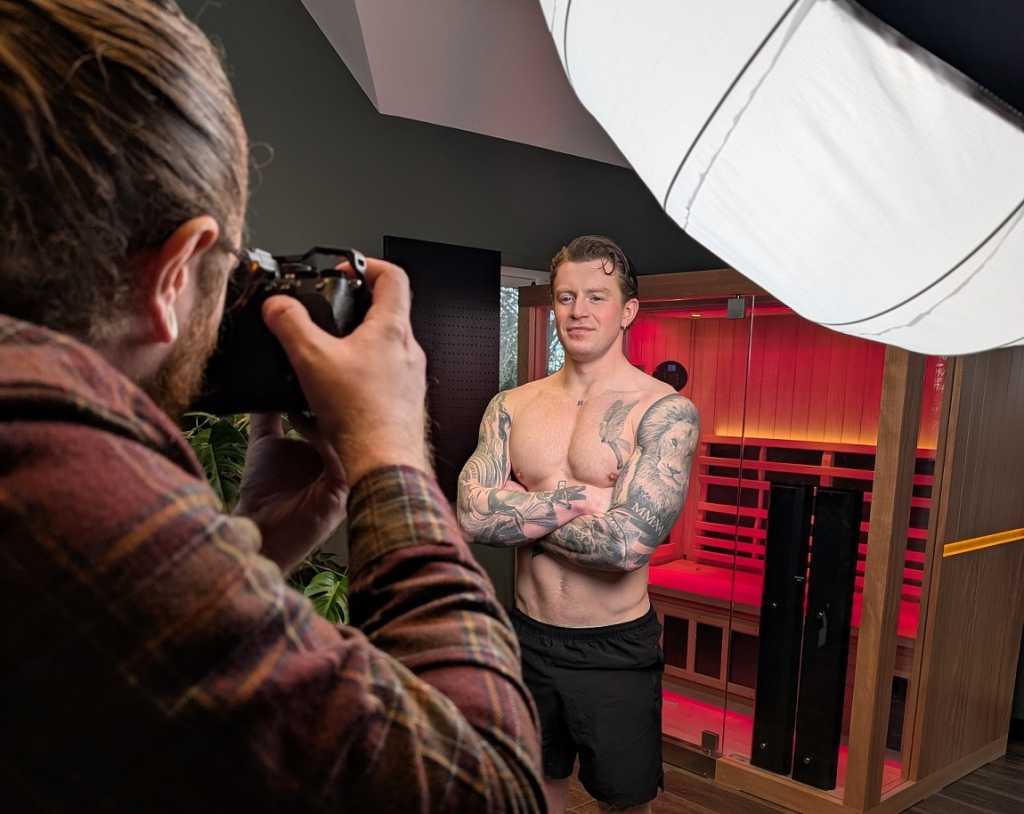
Jacuzzi needed premium video that linked the brand with on-screen talent, in Olympic Champion, Adam Peaty OBE, who could communicate relaxation, quality, and lifestyle credibility - without feeling scripted - for their brand new sauna and ice bath products.
FAQs: Ambassador and Influencer Video Marketing
What’s the difference between an influencer and an ambassador?
Influencers are often campaign-based. Ambassadors are longer-term and focus on consistent representation over time.
Do we need a huge creator for results?
No. Smaller creators can outperform on trust and engagement if the audience fit is strong.
How long should influencer videos be?
Plan a mix: 15–30 seconds for social; 60–120 seconds for web/YouTube when the story is strong.
Can we run influencer videos as ads?
Yes - agree usage rights, whitelisting permissions, paid media terms and territories upfront.
What should be in the contract?
Usage rights, term length, territories (UK/Europe), exclusivity, deliverables, review rounds, disclosure and timeline contingencies.
