Behind the Scenes: How We Produced a Christmas Campaign Film for North Yorkshire Police
Why this Christmas campaign mattered
Christmas is a high-risk period for drink driving and public sector communications teams are under pressure to deliver campaigns that cut through quickly, responsibly and with measurable impact. For North Yorkshire Police, the brief was clear: create a short, hard-hitting road safety campaign video that would feel real, human, and immediate, to reduce drink/drug driving offenders this Christmas.
We landed on a point-of-view (POV) approach - telling the story through the eyes of a drunk driver. It’s a creative choice that brings the audience uncomfortably close to the consequences, without relying on shock for shock’s sake. The result: a film designed for public awareness, social distribution and internal stakeholder confidence.
Campaign snapshot (the scale in numbers)
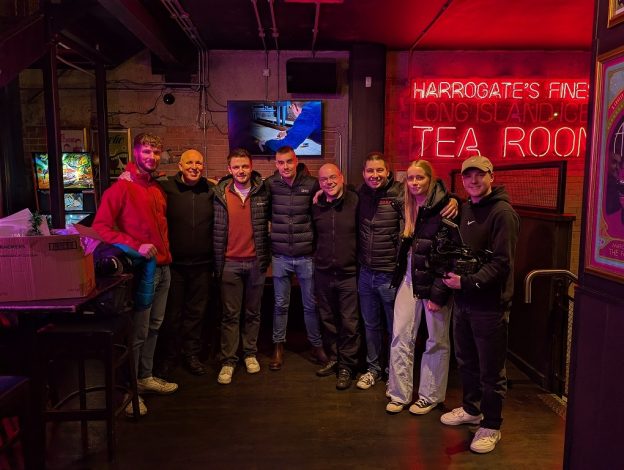
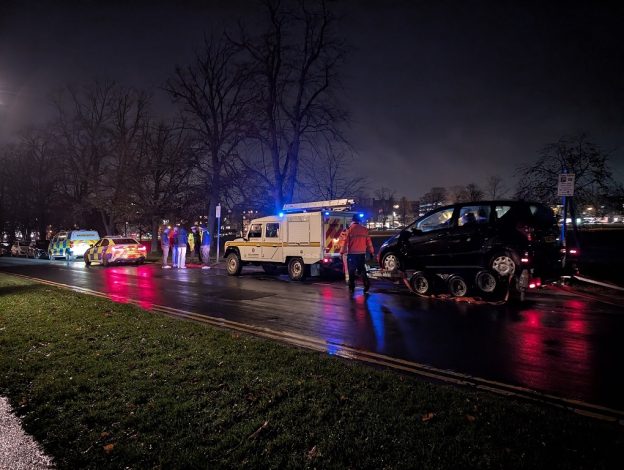
This was a compact shoot with a big operational footprint. For UK-wide public sector campaigns, these numbers matter. They reflect the planning, permissions, safety considerations, and multi-agency coordination required to deliver a film that’s both credible and compliant.
Stage 1: Pre-production (where public sector campaigns are won)
Pre-production is where we reduce risk, protect stakeholders and make sure the creative idea can actually be delivered on time and on budget.
Location sourcing and logistics
With five locations across a tight schedule, location sourcing wasn’t just about what looked good on camera - it was about what was practical and safe.
Key considerations included:
- Access and parking for crew, kit and emergency vehicles
- Permissions and stakeholder approvals
- Managing public visibility and disruption
- Safety planning (especially around roads, vehicles, and emergency response scenes)
- Contingencies for weather and winter daylight
Creative development for a sensitive message
Public sector communications often sit at the intersection of behaviour change and public accountability. The POV drunk driver concept needed to be:
- Clear and immediate (viewers understand the scenario fast)
- Responsible (no glamorising, no ambiguity)
- Authentic (feels like a real incident, not a dramatisation)
- Suitable for multiple channels (social, web, internal comms)
We worked to ensure the narrative stayed focused on consequences and responsibility, while still being emotionally engaging.
Storyboarding and shot planning
A POV film lives or dies on shot design. Storyboarding helped us:
- Map the viewer journey moment-by-moment
- Plan camera placement and movement for realism
- Identify where we needed emergency service presence on set
- Build a schedule that made sense across locations
For corporate communications professionals, this is also where stakeholder confidence grows - because the creative becomes visible, reviewable and sign-off ready.
"We are really pleased with it, it made the tele as well! It looks great, so thank you."
Stage 2: Production (two days, five locations, multiple agencies)
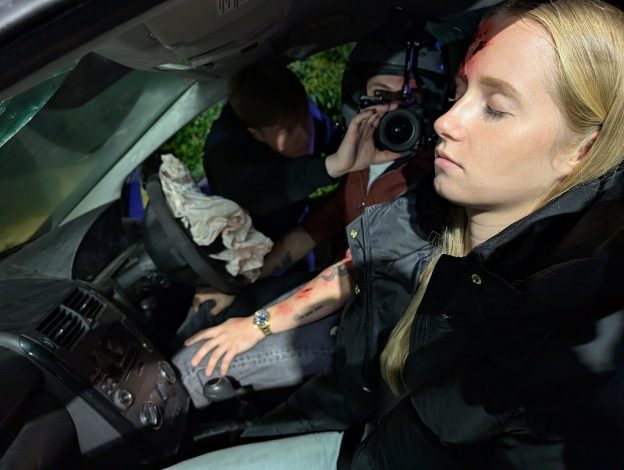
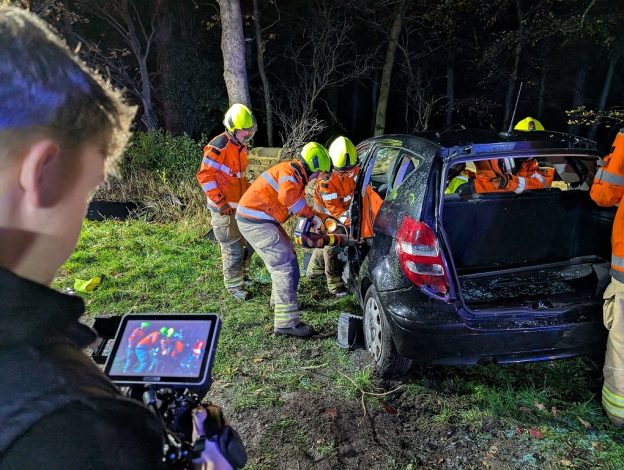
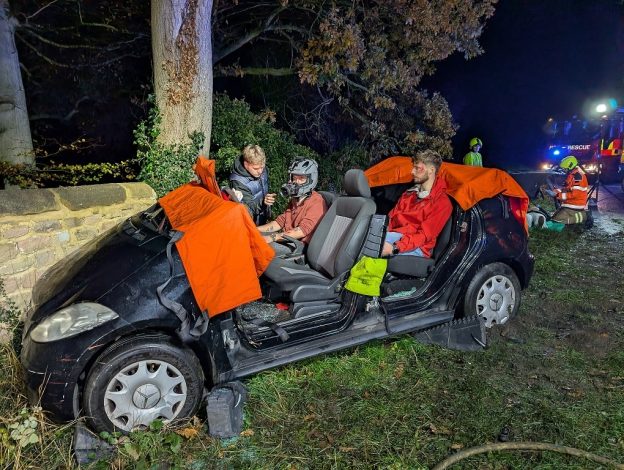
Production was about capturing realism while keeping the operation controlled and where every minute counted working with emergency services personnel.
Filming and directing a POV narrative
Directing POV is different from directing traditional scenes. The camera becomes the character, so every movement, focus shift and timing choice affects how believable the film feels.
On set, we focused on:
- Consistent POV language (what the character would realistically see)
- Performance that supports the concept (actors reacting to the POV)
- Maintaining continuity across multiple locations
- Capturing enough coverage to protect the edit
Coordinating emergency services on set
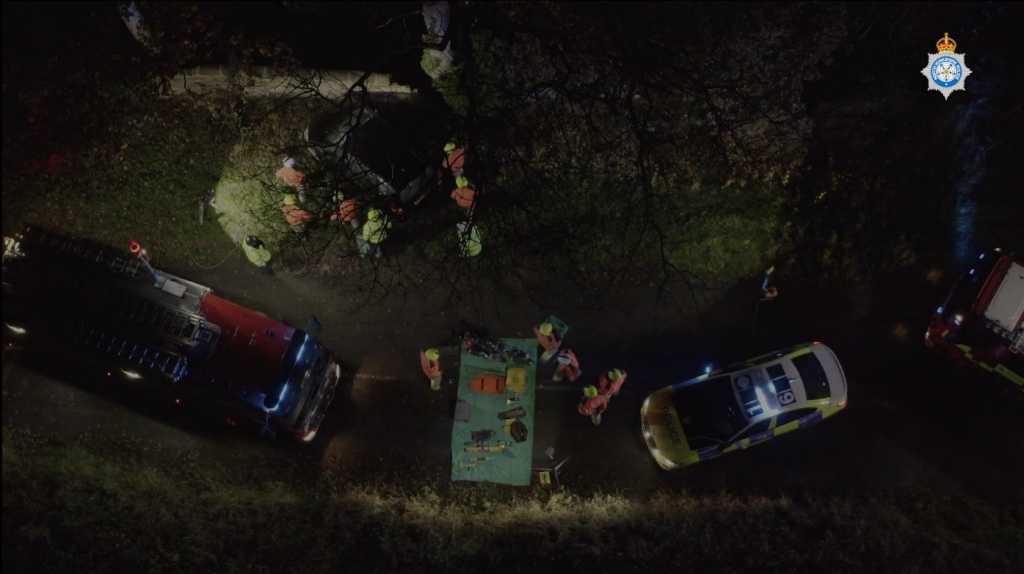
Having two fire engines, two police officers, three intensive care nurses and 14 fire crew elevated authenticity - but it also raised the bar for planning and time sensitivities.
We built the shoot around:
- Clear on-set roles and communication
- Briefings and controlled movement around vehicles
- Efficient blocking to respect everyone’s time
- A schedule that minimised resets and downtime
This kind of collaboration is a strong example of how public sector video production often depends on operational partners, not just creative teams.

Stage 3: Post-production (where the story becomes the campaign)
Post-production is where we shape the emotional arc, sharpen the message and deliver assets that work across channels.
Editing for pace, clarity, and impact
With a short campaign film, every second has a job to do. In the edit, we focused on:
- Fast comprehension (audiences understand the scenario immediately)
- Controlled escalation (tension rises without becoming chaotic)
- Clean messaging (no confusion about cause and consequence)
- A strong ending that supports campaign recall
Sound design and finishing
POV films rely heavily on sound to sell reality. We used sound design to reinforce:
- Disorientation and impaired judgement
- The urgency of emergency response
- The emotional weight of the incident
Finishing included colour grading for consistency across locations and a final polish that kept the film grounded and believable.
Results: how the film performed (and what comms teams can measure)
For public sector corporate communications, “results” isn’t just views - it’s whether the message lands, drives the public to change and whether stakeholders feel confident sharing it.
Depending on where the film is hosted (social platforms, website, partner channels), common performance indicators include:
- Video views and completion rate (did people actually watch to the key message?)
- Engagement (comments, shares, saves - especially important for awareness campaigns)
- Click-throughs to supporting pages (campaign landing pages, resources, reporting pages)
- Local and regional amplification (partner shares, community groups, press pickup)
We're pleased to say this film garnered coverage on ITV and the BBC on their local news programmes as well as excellent numbers and engagement across the Police's social platforms.